MTU 23521640 Plate
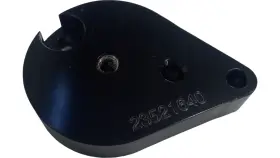
( Brand: Mtu ), ( Manufacturer Part Number: 23521640 ), ( Type: Parts )
Review MTU Plate New Oem
The MTU 23521640 plate is a high-performance, large-format filter plate designed for use in industrial and laboratory applications. This plate is constructed from a durable, corrosion-resistant material, making it ideal for use in harsh environments.
The MTU 23521640 plate has a filtration area of 2352 x 1640 millimeters, making it suitable for processing large volumes of liquid or slurry. The plate is engineered with a fine micropore structure, which allows it to effectively filter out even the smallest particles while maintaining excellent flow rates.
The surface of the MTU 23521640 plate is smooth and even, ensuring consistent filtration performance and preventing cake buildup. The plate is also easy to clean and can be sterilized for use in applications requiring strict hygiene standards.
The MTU 23521640 plate is designed to be used with a filter press or a vacuum filtration system. It is compatible with a wide range of filter media and can be used to process a variety of liquids and slurries, including water, chemicals, and food products.
This plate is engineered to provide reliable and consistent filtration performance, even under heavy loads and high pressures. Its large filtration area and robust construction make it a cost-effective solution for applications requiring large-scale filtration.
In summary, the MTU 23521640 plate is a versatile and high-performance filter plate that is suitable for use in a wide range of industrial and laboratory applications. Its large filtration area, fine micropore structure, and durable construction make it an effective and efficient solution for filtering large volumes of liquid or slurry.
Buying an MTU (Maximum Transmission Unit) with a size of 23521640 bytes, also known as a Jumbo Frame, can have several pros and cons for a network. here are some potential benefits and drawbacks:
Pros:1. Increased Efficiency: Larger frames can reduce the overhead of data transmission, as fewer frames are needed to transmit the same amount of data. This can lead to improved network performance, particularly in environments where large data packets are common, such as in data centers or for multimedia applications.
2. Reduced Latency: By reducing the number of frames transmitted, there is less delay between sending and receiving data, leading to lower latency and improved response times.
3. Improved Network Utilization: Jumbo Frames can allow for better use of network bandwidth, as larger frames can carry more data. This can be particularly beneficial in high-speed networks, where the potential for underutilization is higher.
Cons:1. Increased Complexity: Implementing Jumbo Frames requires configuring all devices on the network to support them, which can add complexity and potential for configuration errors.
2. Increased Risk of Errors: Larger frames increase the risk of errors during transmission, as there is more data that can be affected by packet loss, collisions, or other issues. This can lead to retransmissions and increased network congestion.
3. Compatibility Issues: Not all devices support Jumbo Frames, particularly older or lower-end hardware. Ensuring compatibility across the entire network can be a challenge, and may require upgrades or replacements of certain devices.
In conclusion, the decision to use Jumbo Frames with an MTU size of 23521640 bytes depends on the specific requirements and constraints of the network. The potential benefits of increased efficiency, reduced latency, and improved network utilization can be significant, but the added complexity, increased risk of errors, and compatibility issues must also be considered.
If the network is primarily used for large data transfers or multimedia applications, and all devices support Jumbo Frames, then using an MTU size of 23521640 bytes may be a worthwhile investment. However, if the network is relatively small or consists of older or lower-end devices, the added complexity and potential for compatibility issues may outweigh the benefits.
Overall, it is recommended to carefully evaluate the specific needs and constraints of the network before implementing Jumbo Frames, and to consider the potential benefits and drawbacks in the context of the network's overall performance and utilization requirements.
Details:
Buyer should verify this is the exact part needed before purchasing.
part #: 23521640 price
- $100.35
specifications turbiparts:
- brand: Mtu
- mpn: 23521640
- type: Parts
returns turbiparts:
- policy: Returns Accepted
- paid by: Seller
- time: 30 Days
payments turbiparts:
- wallet: Apple-pay
- credit card: Visa
- other
offer turbiparts:
- sold: 0
- availability: In Stock
- options: Ship-to-home
- started: May 21, 2026
- quantity: 4
- best offers: True
shipping turbiparts:
- type: Fixed
- service: Standard
- cost: $14.95
- transit: 2-6 Days
- class: Standard
seller turbiparts:
- city: Beaver Dam, WI
- # reviews: 24154
- rating: 99.7%
general turbiparts:
- Air Fuel Delivery > Turbos, Superchargers Intercoolers > Turbos Parts
- condition: New
Mtu 23521640 Is Similar To:
- Mtu 1820325c3 Tube New Oem (61.5% similar) Buyer should verify this is the exact part needed before purchasing...(May 23rd, 2025)
- Mtu 23528794 Exhaust Turbocharger New Oem (62.7% similar) Buyer should verify this is the exact part needed before purchasing...(September 25th, 2025)
- Mtu 5113978 Adaptor Oil Clr Lh A Eng New Oem (48.6% similar) Buyer should verify this is the exact part needed before purchasing...(September 26th, 2025)
- Mtu 8923892 Cvr Blower End Plate 12 And New Oem (57.5% similar) Buyer should verify this is the exact part needed before purchasing...(September 29th, 2025)
- Mtu 23528382 Tube New Oem (70.6% similar) Buyer should verify this is the exact part needed before purchasing...(February 8th, 2026)
- Mtu 23528183 Tube New Oem (74.5% similar) Buyer should verify this is the exact part needed before purchasing...(May 15th, 2026)
- Mtu 23503761 Genuine Blower New Oem (59% similar) Buyer should verify this is the exact part needed before purchasing...(May 21st, 2026)
